 By Bhavin Geary
When building an investment portfolio, the primary focus often lands on the stock market. Captivated by stories of high-growth tech companies and explosive market rallies, many investors allocate the majority of their capital to equities. However, a well-rounded financial strategy requires a stabilizing force to balance the volatile nature of stocks. This is where bonds enter the picture.
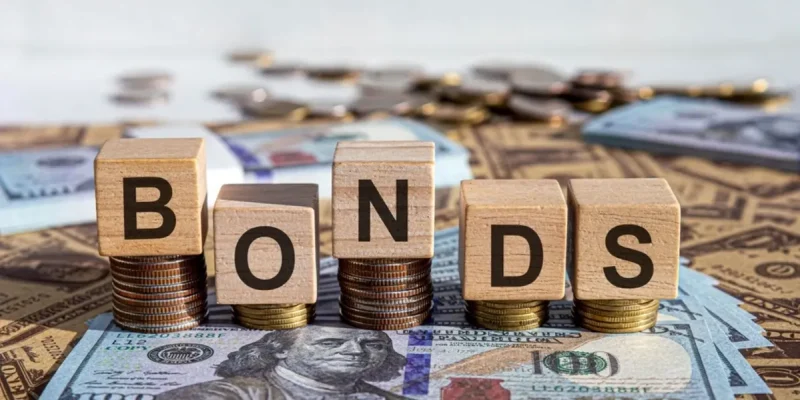
Bonds serve as a cornerstone of wealth preservation and consistent income generation. While they rarely offer the dramatic upside potential of equity markets, they provide predictable distributions and capital preservation that can anchor a portfolio during economic downturns. Understanding how bonds function, the different types available, and how to evaluate their risks is essential for any investor seeking long-term financial stability.
What is a Bond?
At its core, a bond is a debt security. When you buy a bond, you are essentially acting as a lender. You are loaning money to an issuer, which could be a government entity, a municipality, or a private corporation. In exchange for this capital, the issuer promises to pay you a specific interest rate over a predetermined timeframe and return the initial principal amount when the loan matures.
To fully grasp bond mechanics, you must familiarize yourself with a few key terms:
-
Par Value: Also known as face value, this is the principal amount the bond issuer promises to pay back to the investor once the bond matures. Most corporate and government bonds have a standard par value of one thousand dollars.
-
Coupon Rate: This represents the fixed annual interest rate the issuer agrees to pay the bondholder. If a bond has a par value of one thousand dollars and a five percent coupon rate, it will pay fifty dollars in interest annually, typically split into two semi-annual payments.
-
Maturity Date: This is the specific future date when the loan ends and the issuer must return the full par value to the investor.
The Inverse Relationship Between Prices and Yields
[Image illustrating the inverse relationship between bond prices and interest rates]
One of the most critical concepts in fixed-income investing is the mathematical relationship between a bond price and its yield. They move in opposite directions. When market interest rates rise, existing bond prices fall. Conversely, when market interest rates drop, existing bond prices rise.
To understand why this happens, imagine you own a bond with a fixed five percent coupon rate. If the Federal Reserve suddenly raises interest rates, new bonds entering the market will begin offering a six percent coupon rate. Naturally, no investor will want to buy your older five percent bond at its full face value when they can get a six percent return elsewhere.
To sell your bond on the secondary market, you must lower your asking price below the one thousand dollar par value. This discount compensates the buyer by boosting their total yield to match current market conditions. If interest rates fall instead, your five percent bond becomes highly attractive, allowing you to sell it at a premium above par value.
Major Types of Bonds
The fixed-income market is vast and categorized primarily by the type of entity issuing the debt. Each category carries a unique profile of risk, return, and tax implications.
US Treasury Securities
Treasury bonds are backed by the full faith and credit of the United States government. Because the government possesses the power to print currency and levy taxes, these securities are considered virtually free of default risk. As a result, they offer lower yields compared to other debt instruments.
Treasuries are divided by maturity lengths into Bills (maturing in one year or less), Notes (maturing in two to ten years), and Bonds (maturing in twenty to thirty years). The interest earned on these securities is exempt from state and local taxes, making them highly attractive to investors in high-tax jurisdictions.
Corporate Bonds
Issued by private companies to fund capital expenditures, expansions, or acquisitions, corporate bonds carry higher risk than government debt. If a corporation experiences financial distress, it may default on its obligations. To attract investors, corporations must offer higher coupon rates.
Corporate debt is divided into investment-grade bonds, which are issued by financially stable corporations, and high-yield bonds (often called junk bonds), which are issued by companies with lower credit ratings and carry substantial default risk.
Municipal Bonds
Municipal bonds are issued by state, local, or county governments, as well as public entities like school districts and airport authorities. The primary appeal of municipal bonds is their unique tax status. The interest income generated by these bonds is usually exempt from federal income taxes. Furthermore, if you purchase a municipal bond issued by your home state or city, the interest is often exempt from state and local taxes as well.
Evaluating Credit Risk and Ratings
Because you are lending money, you must evaluate the likelihood that the borrower will pay you back. The financial community relies on independent credit rating agencies, such as Standard and Poor’s, Moody’s, and Fitch, to assess this risk.
These agencies evaluate the financial health of issuers and assign letter grades. The highest quality bonds receive a rating of AAA, indicating an exceptionally strong capacity to meet financial commitments. Ratings drop through AA, A, and BBB, which collectively form the investment-grade market.
Any bond rated BB or lower is classified as speculative or non-investment grade. While these speculative bonds offer enticingly high yields, they carry a much higher probability of default, making them less suitable for conservative investors prioritizing stable returns.
Investment Strategies for Fixed Income
Investors can approach the bond market through two primary avenues, depending on their capital availability and desire for hands-on management.
Purchasing Individual Bonds
Buying individual bonds allows you to lock in a specific yield and guarantees the return of your principal at maturity, assuming the issuer does not default. This approach provides maximum predictability. However, building a diversified portfolio of individual bonds requires a significant amount of capital, as minimum investment requirements can be high.
Utilizing Bond Funds and ETFs
For retail investors, bond mutual funds and Exchange-Traded Funds offer an efficient alternative. These funds pool money from thousands of investors to purchase a massive, diversified portfolio of hundreds of different corporate and government bonds. While this structure eliminates the guarantee of getting your principal back at a specific maturity date, it provides excellent liquidity, instant diversification, and professional management for a very low initial investment.
Comparing Fixed Income Options
| Bond Type | Risk Profile | Tax Advantages | Ideal For |
| US Treasuries | Lowest default risk | Exempt from state and local taxes | Conservative investors seeking maximum safety |
| Investment-Grade Corporate | Moderate credit risk | None | Investors looking to outperform inflation with controlled risk |
| Municipal Bonds | Low to moderate risk | Exempt from federal, state, and local taxes | High earners looking to reduce tax liabilities |
| High-Yield Corporate | High default risk | None | Aggressive portfolios hunting for maximum income |
Frequently Asked Questions
What is the difference between a bond coupon rate and its current yield?
The coupon rate is the fixed interest percentage established when the bond is first issued, calculated against the par value. The current yield is a dynamic metric calculated by dividing the annual coupon payment by the current market price of the bond. If a one thousand dollar bond with a five percent coupon rate drops in market value to nine hundred dollars, the annual payment remains fifty dollars, but the current yield rises to five point five six percent because you paid less to acquire that income stream.
How does inflation erode the value of long-term fixed-income investments?
Inflation is the primary enemy of fixed-income investors. Because traditional bonds pay a fixed nominal amount of interest, a sudden spike in inflation reduces the purchasing power of those future payments. If your bond pays a fixed four percent interest rate, but inflation jumps to five percent, you are effectively losing one percent of real purchasing power each year. To combat this, investors often look to Treasury Inflation-Protected Securities, which adjust their principal value in response to changes in the Consumer Price Index.
What is callable risk and how does it impact investors?
Many corporate and municipal bonds include a call provision, which grants the issuer the right to buy back the bond before its official maturity date. Issuers typically exercise this option when market interest rates drop, allowing them to refinance their debt at a lower cost. For investors, this creates reinvestment risk, as their high-yielding bond is taken away, forcing them to reinvest their returned principal into a lower interest rate environment.
What does the term duration mean in relation to a bond portfolio?
Duration is a sophisticated metric that measures a bond sensitivity to changes in interest rates, expressed in years. It accounts for maturity length, coupon rate, and payment frequency. A bond or fund with a high duration will experience greater price volatility when interest rates shift compared to one with a low duration. For example, if a bond fund has a duration of five years, a one percent increase in interest rates will cause the fund value to drop by approximately five percent.
How do zero-coupon bonds generate a return if they do not make periodic interest payments?
Zero-coupon bonds do not pay regular semi-annual interest. Instead, they are issued at a deep discount to their face value. For instance, you might purchase a zero-coupon bond for seven hundred dollars. Over its lifespan, the bond gradually accrues value until it reaches its full one thousand dollar par value at maturity. The difference between the discounted purchase price and the final payout at maturity represents the investor total return.
Why do long-term bonds generally offer higher yields than short-term bonds?
Under normal economic conditions, investors demand a higher yield to lock up their capital for longer periods. Long-term bonds expose investors to a greater degree of interest rate risk, inflation risk, and default risk over time. This upward-sloping relationship is reflected in the standard yield curve. However, during periods of economic anxiety or impending recession, the curve can invert, causing short-term yields to temporarily surpass long-term yields.